Pilot Wally Paton & the B-17

Standard

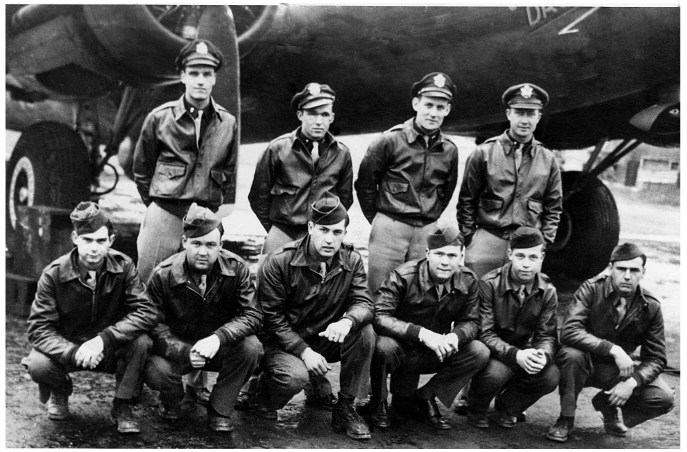
02-8 B-17 crew

Pilot Wally Paton (second row, second from left) with his crew in front of the B-17

“Pilot Wally Paton never gave the order to bail out, despite the condition of his B-17 on May 11, 1944. The day began with orders to bomb a ball bearing plant in Saarbrucken, Germany. The day ended with a kiss on the airfield at Molesworth, England, and a shot of scotch. In between the ten airmen who did their job on a plane called ‘Knock-out Dropper’ straddled the thin line between life and death for some ten hours. ‘That was the toughest mission we ever flew,’ said Paton, a first lieutenant in the 359th Bomber Squadron, 303rd Bomber Group….’There was a whole squadron of crippled airplanes flying back to the base that day. The subject of bailing never came up. No one was injured and no one wanted to be caught in enemy territory. All we wanted was to get home after a successful mission…’” excerpt from Journey Home – Nogales International Times interview with Wally Paton

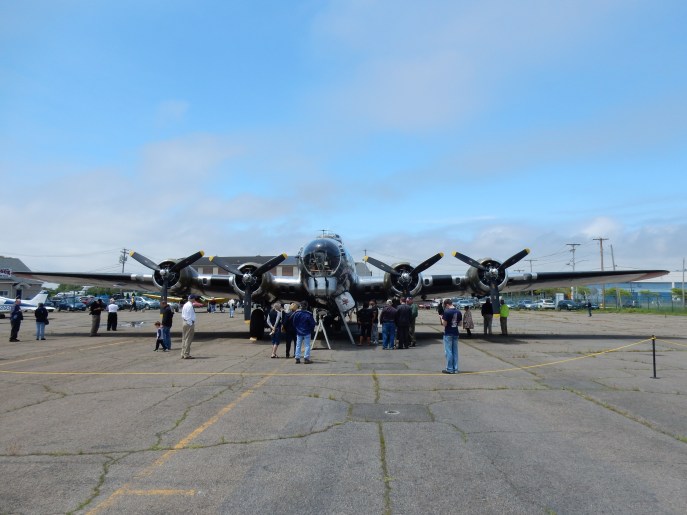
Last May, some 73 years after my dad flew that harrowing mission over Germany, the B-17 flew into Sikorsky Airport, about 20 minutes from my home. The plane was traveling around the country providing tours and rides. When I heard on my local news that May 31st would be her last day here, I dropped everything and headed for Sikorsky. Pulling into the parking lot, I was awestruck.  I hadn’t imagined her that big.
2017-05-31 13.12.11

B-17 at Sikorsky Airport, May 31, 2017


With a shiny steel exterior, a massive wing span sporting four monster engines, and gun turrets back, front and under, she is well nicknamed – “the flying fortress.”  Clouds moved in while we were there, so pilots were delaying passenger rides until the sky cleared. I never got to ride in her, but I did get an extensive tour of the inside and outside of the plane and by chance got to talk to a Veteran who had flown the B-17’s.
2017-05-31 12.59.06

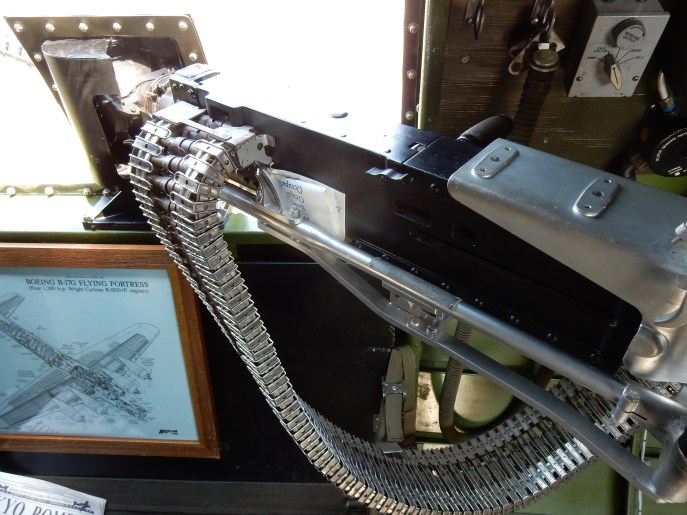
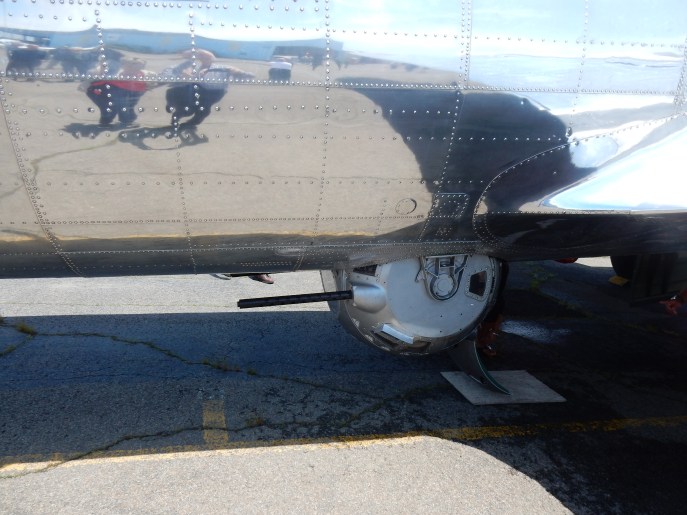
Gun inside the B-17

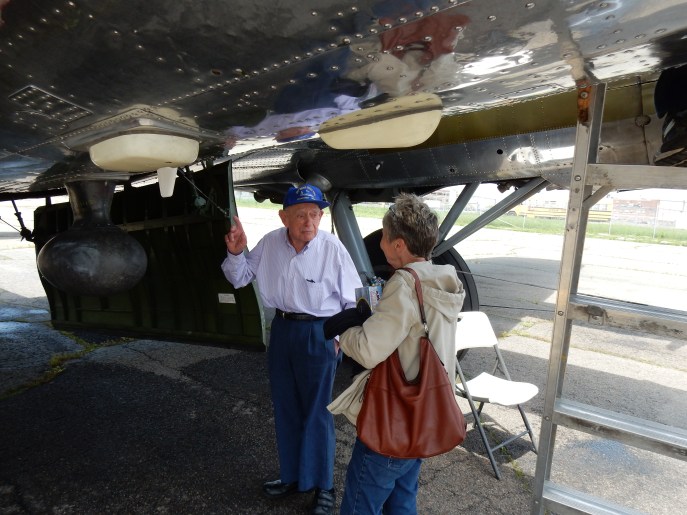
I had been there perhaps an hour when the WWII veteran made an unexpected appearance. People gathered around him like he was a celebrity, wanting to hear a story or just catch a word with one of the “greatest generation.” I waited my turn as I wanted to spend a little time with this hero having just written about my Dad’s experiences as a pilot in WWII for my book, Journey Home. Finally, it was my turn to have his full attention. He pointed out where the bombs were housed – he related a story about the time the bombs got stuck and they had to go in there and manually push them. He talked about enemy fire and bullet holes in the plane and friends he had lost in battle.
2017-05-31 13.32.53

I had an opportunity to talk to a WWII veteran who flew the B-17’s, just like Dad

When I got home, I wrote my brother, George, about the experience. It had been an exciting and deeply emotional day and I wanted to share it with him. He wrote back his own story about his fondest memory of the B-17.

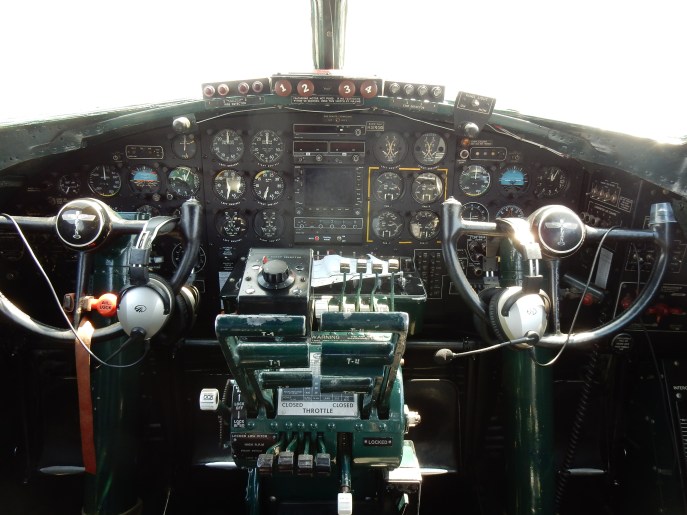
“In the 1990’s the Owl’s Head (Maine) airport was putting on a air show and was going to have three WWII planes on hand, one being the B-17. I couldn’t pass that up. I went up there with my rather large video camera of the era. It was Friday afternoon and a small crowd was waiting for the three planes to fly in. The first was a small fighter (P-38, I think) – I filmed it landing. Then a CD-3 (small cargo plane) did the same. Then it came, hearing it first, then looking up – a B-17 – overhead. It flew down past the end of the runway, banked hard making a 180 turn and approached the runway. During the hard turn I could see the distinctive profile of the wings with all four engines. It landed and taxied right up to me with all four engines firing away and then shut down, the propellers slowly stopped. I filmed it all. I got to go on board and was surprised at how cramped the interior is. I squeezed past into the pilot’s seat and tried to imagine Dad sitting there with his co-pilot inches away. The gun turret was directly overhead and the navigation compartment right below. I squeezed through the bomb bay area and out to the tail – each area having defensive gun turrets along the way.
2017-05-31 12.53.33

Pilot and co-pilot seats – B-17

During my next visit to Patagonia, I told Dad I had a surprise for him. I sat him and Mom down and played the video on the TV. I said there were a few vintage planes on the film and I wanted to see if he could identify them. First the fighter appears and he remembered flying alongside many of them during the first part of his missions. The CD-3 was next and he remembered seeing a lot of those back then delivering parts and soldiers. He talked about it for a few minutes as I paused the film. I proceeded and then the B-17 came into view and he said ‘Oh my God, it’s a 17’ and he couldn’t take his eyes off the screen. ‘It’s been a long time since I have seen one of those in the air,’ he said.  You could tell he was really moved seeing one of those iron birds still flying. It landed and taxied right up to him, shut down the engines and then the plane sat there in silence, as did Dad. I told him how I had filmed it. He didn’t say much at first – just looked and remembered what those days during the war were like seeing scores of the 17’s coming and going. He was surprised and pleased to see what once was the aircraft he flew 31 bombing missions in and had somehow survived it all, which many didn’t.” – George Paton

A young man named Rishi Sharma, just 19 years old, is currently traveling around the country interviewing surviving WWII veterans. His mission – to interview all those vets who are still with us before their story is lost forever. My Dad will not be among those this young man interviews – he passed away in 2001.  Fortunately for our family, my dad was interviewed in 2000 by Dr. Robert Whitcomb, a research entomologist who had retired to the Patagonia, Arizona area and enjoyed interviewing and writing about WWII veterans. We have the taped interviews and manuscript. Both Dr. Whitcomb and my Dad passed away before the manuscript reached final form, but his wife Judith offered to share the tapes with the family. What an incredible gift to hear my dad’s voice talking about his war experiences.

As we honor today, Veteran’s Day, November 11, 2017,  the men and women who sacrificed so much for our freedom, I am reminded of these special memories of my dad as well as the “simple act of kindness” of Judith Whitcomb in sharing his story with us. Many of those who served were just 19 and 20 years old at the time – one day graduating from high school and just a few months later sitting in a bomber risking everything to  protect our country.

“I’m glad I participated in the War,” Paton said. “I don’t feel like I did anything extraordinary. I did my job like every other American.” – Wally Paton, Nogales International Times

Dad earned four Oak Leaf Clusters, a Distinguished Flying Cross and two combat ribbons.

Pretty extraordinary, I’d say.

She was a great plane, Paton said with a smile. Everyone depended on her to get us through every battle and she did.” Wally Paton,  Nogales International Times
2017-05-31 13.07.19

Ball Gunner Turret – gunner was protected only by glass in a very cramped space
2017-05-31 13.26.42

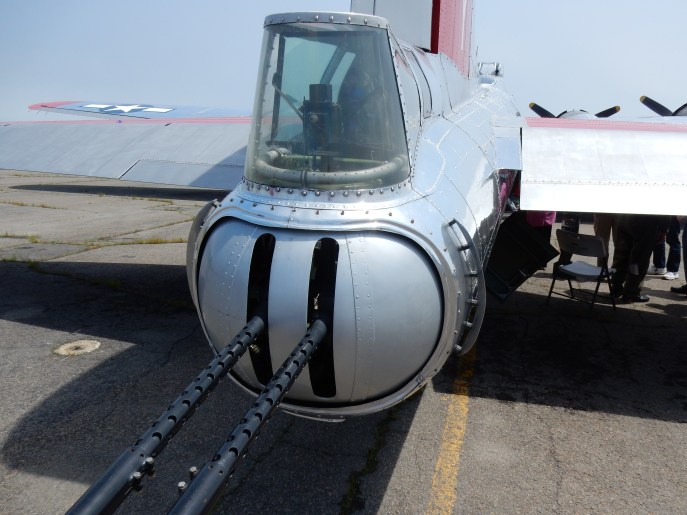
Back of B-17 with Gunner Turret

2017-05-31 12.54.10

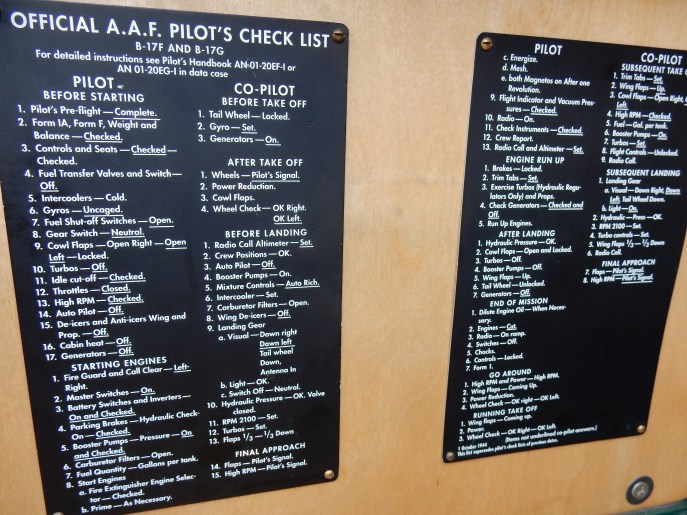
Pilot’s check List – B-17


The Paton Farm, Southborough, MA

Standard

1- Paton Farm circa 1950(2)

The Paton Family Farm circa 1950 at 5 Ward Rd., Southborough, MA

The Southborough Historical Society recently posted on their website a list of the historical houses in my hometown of Southborough, Massachusetts. Surprising to me, included on this list was my childhood home at 5 Ward Road (the Samuel Brigham House), known to us as the Paton Farm. My best friend’s house, across the street (known to us as the Wilson’s House) but historically listed as the JW Buck House at 10 Ward Road was also on the list; and our close farming neighbor, Jack Finn−his  house (the Dana Brigham House) at 2 Brigham Street was also listed.

“This residential area, which evolved from two large early nineteenth-century farms, first developed into a small clustered neighborhood in the middle of the 19th century with the building of three vernacular Greek Revival houses at 2 Brigham Street, and 5 and 10 Ward Road near the outlet of Brigham Pond.”− Massachusetts Historical Commission

I am not sure why this impressed me so much. In general, our old farm house is certainly nothing to brag about. But in the Town’s listing it says the architectural style is “Greek Revival.” That sounds impressive. “Year constructed – circa 1855.” Wow! Our house was nearly 100 years old when we moved there in 1949. “Historic Name: Brigham, Samuel House.” Intriguing. Now, I wanted to know more about this Greek Revival, white-clapboard farm house that I spent eighteen years growing up in.

Greek Revival Houses were built all over New England from 1825-1860 and were of 2 types. One incorporates the Greek themes including pilasters, columns, pediments, wide friezes and porticoes, resembling the temples of Greece. The second type is more modest incorporating simple characteristics of a Greek building with few embellishments. Typically both types incorporate the front door to one side of the gable end and to one side of the windows. My house clearly falls into category number 2−simple. Greek revival homes were typically painted white to resemble the look of marble. That might explain why there are so many white houses in New England.

2- Former Paton farmhouse - 2014

5 Ward Road (2014) with Jack Finn’s barn at 2 Brigham Street in the background. Brigham Street separated our properties.

This architectural style information was all very interesting, but those names listed in the “Historic name” column were calling for explanation. I wanted to know who had lived here, perhaps get to know their history. I am familiar with the name Brigham just from growing up there−adjacent to Ward Road was Brigham Street−the short narrow road separating Jack Finn’s house from mine−the road where I learned to ride my bike−the road cutting through to Route 30 to town−the road which ends at a small pond where we used to ice skate. As a kid, or even as an adult, I didn’t think about the street I lived on−why was it named Ward or Brigham? Turns out, both the Brigham family and the Ward family have a long history in Southborough. Samuel Brigham founded the tanning business and the shoe trade in the neighboring towns of Marlborough & Hudson. Samuel’s sons, Samuel and Dana, lived on farm land that had been divided from their father’s original farm and  lived in the houses at 5 Ward Road and 2 Brigham Street.

Three vernacular Greek Revival gable-front 1 1/2 story, side-hall-entry cottages on granite-block foundations, all apparently built about 1855, remain from the era when the Brigham Mill was still operating.”

On this land was a 25 acre pond called Brigham Pond. It was the largest natural pond in Southborough and by the 1940’s was only a swamp called the Brigham Swamp−I am sure this is where we ice skated. This former pond area could also include what we referred to as the “Fire Hole” −a small pond fed by a brook that would be used by the town in the event a fire broke out in our neighborhood.

In 1870, the Brighams had a small herd of cows and produced several thousand gallons of milk, much of which probably sold to Deerfoot Farms dairy, … they sold butter and produce from a substantial orchard. Samuel was one of a few farmers in Southborough to market wine from his own fruit.” − Massachusetts Historical Commission

Some 80 years later the Paton Farm, the former Samuel Brigham farm, would sell its milk to the same dairy. By this time Deerfoot Farms (which became known as “The Aristocrat of Farms”) had evolved into one of the largest and most successful dairy farms in New England and as a result would be responsible for keeping many of the small dairy farms in Southborough in business for decades. But even while we lived there, throughout the 1950’s and 60’s, the dairy business continued to decline and the landscape continued to change as the suburbs of Boston spread further from the city center and land that was once farmed gave way to development.

“When my parents (Wally & Marion Paton) sold our property (the Paton Farm) in 1967, it was sold as we had purchased it, with 15 acres of field. The new owner would subdivide our field into building lots. The field where the cows grazed, the potatoes and Jack Finn’s corn grew, where the antique pickup truck resided for driving long before any of us had licenses, where my dad cut cords of wood with his large electric saw, where we sledded in the winter strategically turning at just the right moment to avoid going into the brook, has now given way to residential development. Memories remain. Memories of flying our kites made of old sheet material and nylon stocking tails in the treeless open field. Memories of our dog, Brigadoon, standing at the gate each night at 5:00 waiting for entry to round up the cows and bring them down to the barn for milking. You could tell time by this dog, a collie who instinctively knew when it was time to clock in and do her job. Memories of floating our toy boats down the brook; careful to stop them in time before reaching the Fire Hole. This Fire Hole was off limits to us kids, but we would inevitably sail too close and lose our boat to the hole. I suspect that if the hole were ever drained there would be hundreds of tiny wooden boats marooned in the mud below. These boats, which we carefully crafted out of extra wood and a splash of paint, if available, provided hours of fun in this field with the brook running through it.  My town of Southborough, formally known as Stoney Brook, was aptly named for all the stone walls and brooks that marked boundary lines throughout this small New England town. At the far end of this field, where the brook had its origin, was a swamp. It was filled with clumps of soil with spikes of grass protruding out, spaced a leg length apart; where we would spend hours jumping from clump to clump in search of frogs or tadpoles for capture, torment and release. This field, where Brigadoon wandered into her last day of life, perhaps dreaming of retrieving sticks or rounding up her herd; this field, filled with so much of my early years, has been taken over by houses and yards filled with toys, barbeque grills, and swing sets not familiar to a farmer’s daughter who grew up there.” −Journey Home – How a Simple Act of Kindness Led to the Creation of a Living Legacy, by Bonnie Paton Moon

Journeying Home Again

Standard

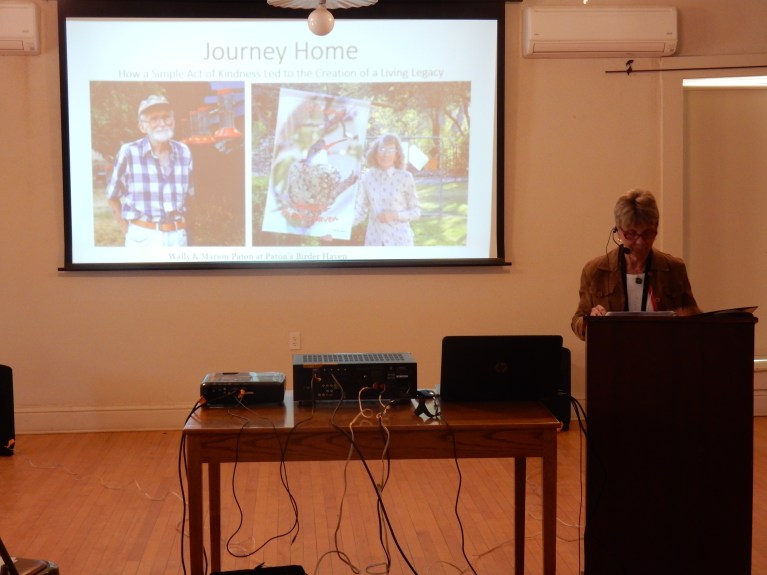
I hadn’t journeyed home to Patagonia in awhile, but this trip was a celebration I would not miss – the three-year reunion of Paton supporters who had been instrumental in “saving” Paton’s Birder Haven. The weekend also marked Tucson Audubon’s Capital Campaign Kick-off to fund improvements to the house. While there, I had the great honor of sharing from my book, Journey Home: How a Simple Act of Kindness Led to the Creation of a Living Legacy” — the story about my parents, Wally & Marion Paton and the creation of their world-renowned birdwatching backyard.

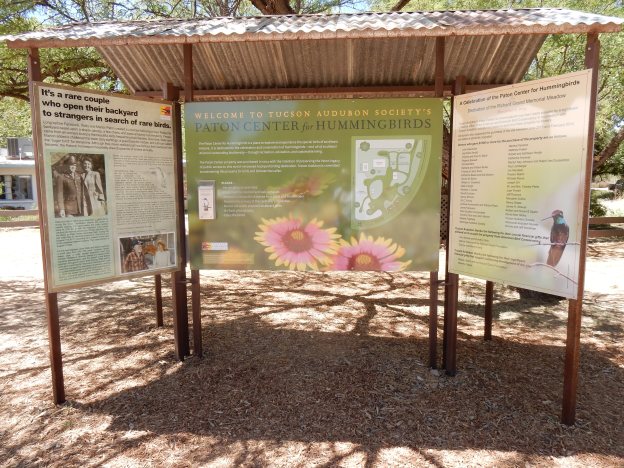
Entering the yard, so familiar, yet different now, I was immediately struck by all the improvements completed by Tucson Audubon Society since my last visit two years ago. My first stop – the Paton Legacy Sign erected in the front yard. What a thrill to see my parents honored for creating this birding mecca that still attracts thousands of visitors each year from all parts of the globe. While reading the sign, a couple from British Columbia approached — their first visit to Paton’s. “Where do we pay?” was their first question to me. “There is no entrance fee,” I replied — a tradition my parents established decades ago and continues today. The “sugar fund,” originally an old coffee can hung on the fence,  now a spiffy donation box, remains strictly voluntary.

3- Paton Legacy Sign

Paton Legacy Sign, Tucson Audubon’s Paton Center for Hummingbirds, April 2017

After three glorious days during which Paton supporters were treated to some fabulous spring migration birding, tours of the property by various Tucson Audubon staff involved in improvement projects, talks by hummingbird expert, Sheri Williamson, of Southern Arizona Birding Observatory (SABO) and Jesus Garcia, Director of the Kino Heritage Fruit Tree Project at the Arizona-Sonora Desert Museum, it was time to say goodbye once again.

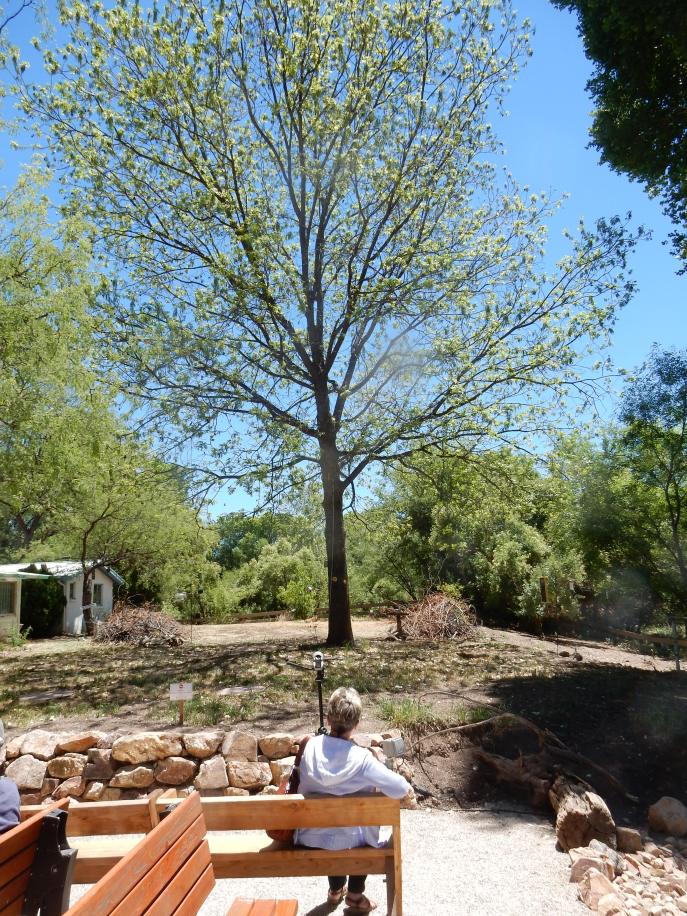
As I wandered the property on that last day, I spent a few moments in the yard reflecting at some special spots. My Dad’s pecan tree still thrives in the back yard, bigger and more robust than ever, still producing a good amount of pecans each year. I sat a good while on my parents’ memorial bench and reflected on the beauty and peacefulness of this place — the land they had nurtured for decades, still loved and nurtured. The bench had been positioned near to the site of my Dad’s former orchard in the front yard. Plans to re-establish an orchard here are underway. Jonathan Horst, Restoration Ecologist, is heading up that project.

10- Dad's Pecan Tree Thriving

Wally Paton’s pecan tree, still thriving

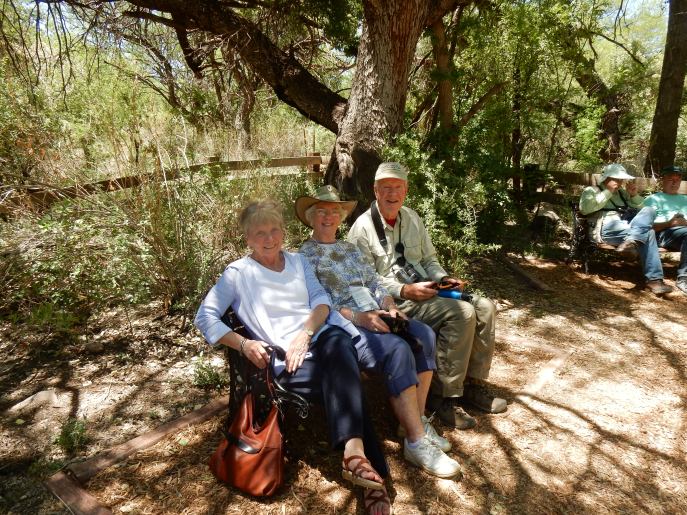
I stopped to remember my Mom’s rose garden in the front yard, ready to pop with bloom — her passion. I sat on a bench in the Richard Grand Memorial Meadow with Carol and Paul Lamberger, long-time Paton supporters. We sat for a good while at this peaceful spot overlooking the newly created pond — all possible because of the kindness and generosity of Marcia Grand and the hard work of Tucson Audubon staff and volunteers.

11-Mom's Rose Garden Ready to Bloom

Marion Paton’s Rose Garden in the background ready to bloom

Then a very special moment happened. As I was getting in the car to leave,  Carol Lamberger inquired if the rose bushes in the front yard were my mothers. “Yes,” I answered, “she loved roses. We would always gift one or several at Mother’s Day.” Carol smiled and then promised to take special care of them for me. And in that moment I was reminded of the special magic that surrounds Patons — it seems to bring out the very best in people — it always did and continues to do so. It is the underlying essence of the place and that spirit of kindness and generosity that my parents exemplified that will continue in perpetuity. In addition, of course, to remaining one of the top birding sites in the world.

12- Bonnie with the Lambergers

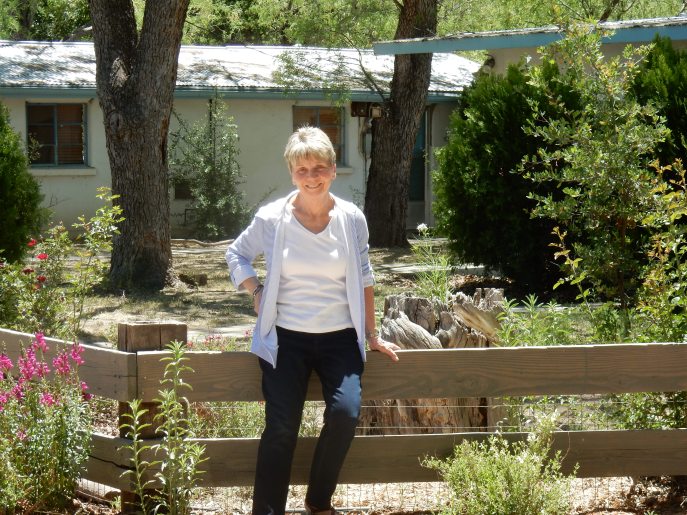
Sitting in the Richard Grand Memorial Meadow (former Paton horse paddock) with the Lambergers

Watch a short video of how Paton’s began: https://www.youtube.com/watch?v=5L_dheYoQBQ


I Got “Geeked” Today

Standard
Geek Photo

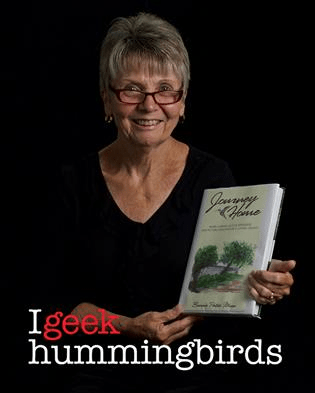
Bonnie Paton Moon holding a copy of her new book, Journey Home

Journey Home – How a Simple Act of Kindness Led to the Creation of a Living Legacy, the story behind the creation of her parents’ birding mecca, Paton’s Birder Haven in Patagonia, AZ

Available now  at Amazon: https://www.amazon.com/Journey-Home-Simple-Kindness-Creation/dp/0997831405

Available directly from the author: https://www.createspace.com/6425627

The word “geek” derived from English dialect, which means “fool” or “freak,” took on new meaning when it returned to popularity in the mid-1990’s during the dot.com bubble of 1995-2000. The definition has changed over time and today there is no definitive meaning. I kind of like the meaning that the Urban Dictionary uses to describe “geeking” — “overly excited about a single thing” or the Merriam-Webster definition of “Geek” – “a person who is very interested in a particular field or activity.” There are many different categories of geeks from science geeks, math geeks, computer geeks and now — after the latest campaign at the Westport Public Library, in Westport, CT — even “hummingbird geeks.”

When our local library first announced in their monthly newsletter that they were embarking on a campaign to promote the Library with a series of “geek” photos I filed it away in the back of my mind and forgot about it.  As the weeks passed, I noticed more and more pictures being posted on the Library website of people with items that they “geek”. All kinds of subjects appeared on the Library website “geek” page. Patrons were geeked with their favorite animal – many dogs of different breeds, and cats, Earthplace was geeked with their resident owl, grandparents  geeked their grandkids, siblings and lovers geeked each other, sports enthusiasts showed up with skis, tennis rackets, soccer balls. Even some notable patrons like David Pogue, former New York Times Technology Writer and Tech Correspondent for CBS Sunday Morning showed up to “geek” technology and music.  Pogue who has filmed four specials for Nova and currently writes his “TechnoFiles” column for Scientific American also geeks music.

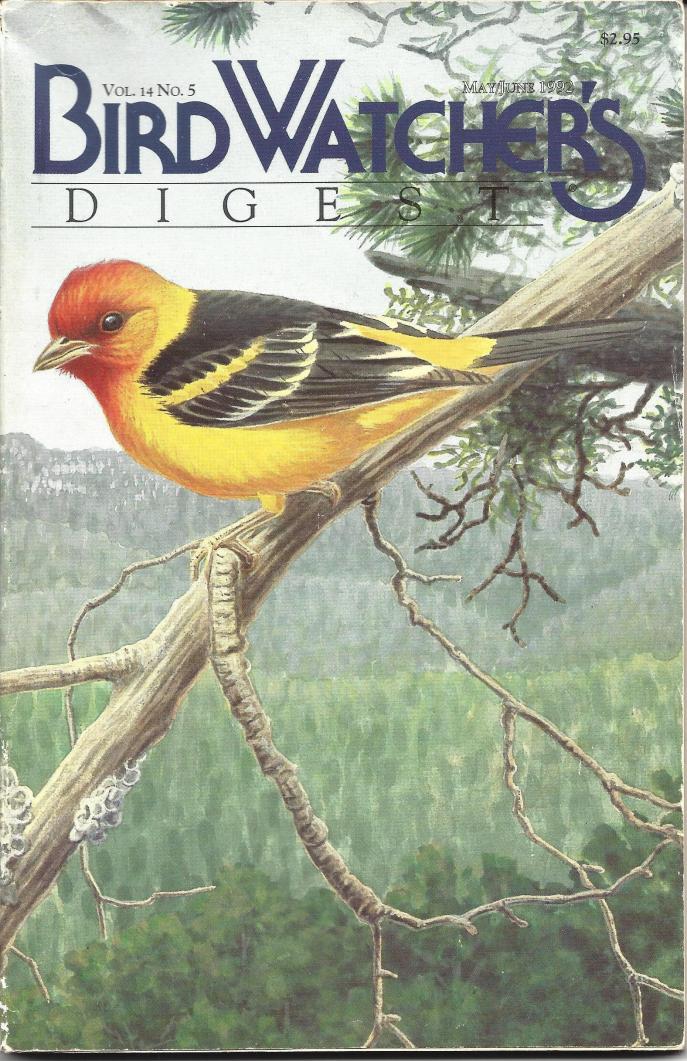
As the Library “Geek” campaign continued, the proof of my book Journey Home arrived on my doorstep — the story about my parents, Wally and Marion Paton, who over the course of several decades created a world-renowned birding “mecca” in their back yard. I had spent the prior 2 1/2 years in efforts to preserve and protect their tiny 1-acre parcel of birding paradise in Patagonia, Arizona which became known as Paton’s Birder Haven and is now called Tucson Audubon’s Paton Center for Hummingbirds. Visited by thousands each year from all corners of the world, it all started because of a rare and unusual hummingbird species, the Violet-crowned Hummingbird. These flying jewels showed up at my parents’ feeders creating quite a stir in the birding world. Such a stir that well-known wildlife photographer, Arthur Morris from NYC came knocking at my parents’ door one day in 1992 with his camera equipment wanting to take some photos. He took lots of photos and when he returned to New York, Mr. Morris wrote an article entitled “Hummingbird Hosts” which appeared in Bird Watcher’s Digest. That encounter and the decision that it sparked in my parents’ minds would change the course of their lives and the lives of thousands of birders and wildlife enthusiasts forever.

bird-watchers-digest-may-june-1992

Arthur Morris’ article entitled “Hummingbird Hosts” appeared in the May/June 1992 Issue (cover above)

What better subject for me to “Geek” than hummingbirds along with my newly completed book, Journey Home – How a Simple Act of Kindness Led to the Creation of a Living Legacy. So I made a note in my weekly calendar to go to the next “Geek” photo session to have my picture taken with the single thing that I am overly excited about these days.  Five hundred and nine library patrons were “Geeked” — I was proud to be among them and to share my parents’ story.

Read more about what’s going on at Tucson Audubon’s Paton Center for Hummingbirds: http://tucsonaudubon.org/go-birding/tucson-audubons-paton-center-for-hummingbirds/